Unified Inbox for Short-Term Rentals: Why You Need It and How to Set It Up
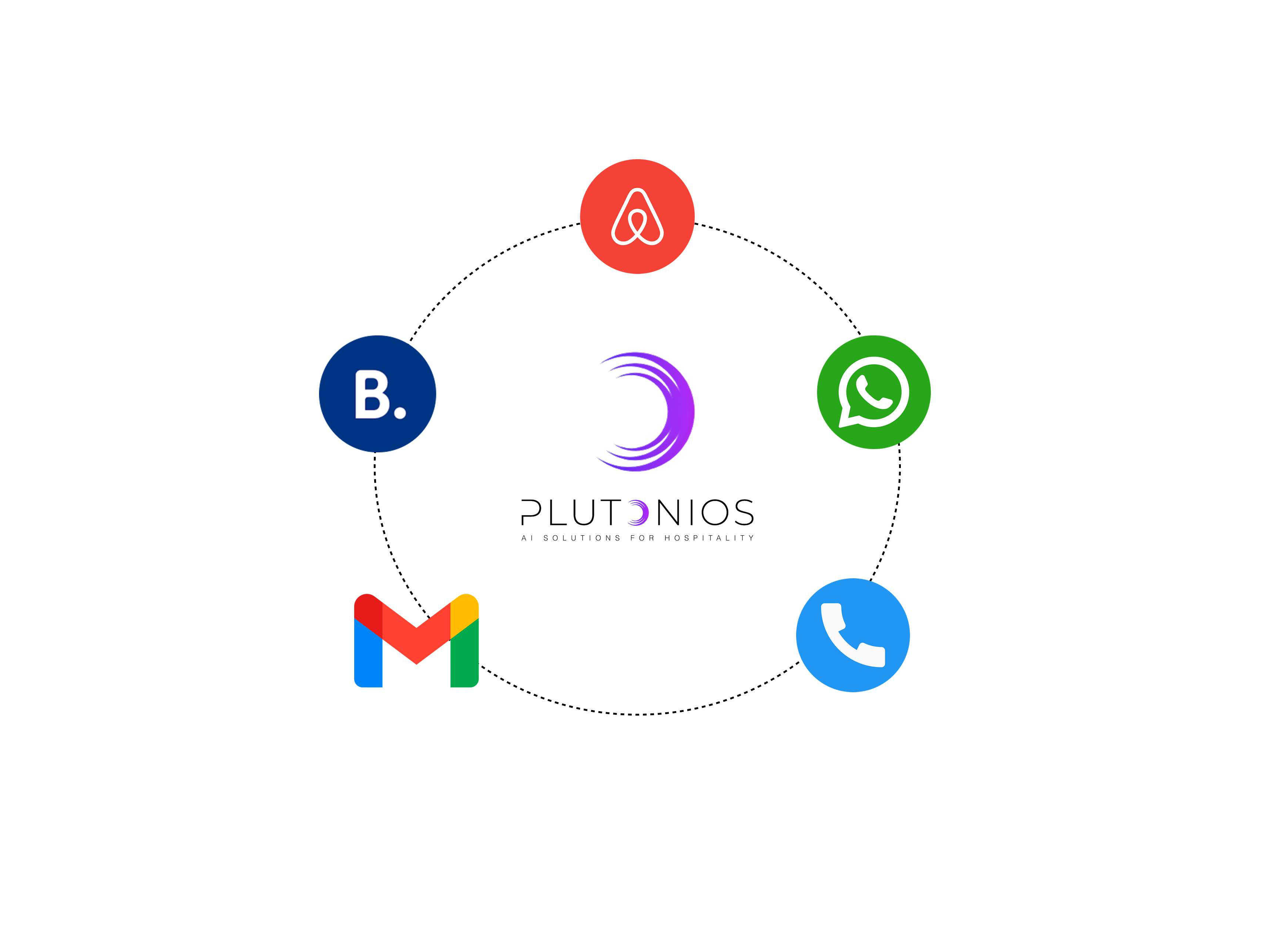
If you manage short-term rentals — even just a few units — there comes a moment when everything starts to get complicated. Messages come from everywhere: Airbnb, Booking.com, WhatsApp, email, maybe even phone calls.
At first it feels manageable. But then things start to pile up. You answer the same question twice, miss an important message, or lose track of what you already told a guest.
The problem isn't working harder or "being more organized." The problem is structural: you're managing communication without a system.
That's where a unified inbox comes in.
What a Unified Inbox Actually Is
A unified inbox isn't just a single place where all messages land. It's a fundamentally different way of working.
Instead of opening five different platforms, you have one space where conversations are already sorted, linked to the right booking and the right property. When a guest writes, you don't just see a message — you see the full context.
You know when they're arriving, where they're staying, what they've already asked, whether someone on your team has already replied. And that changes everything about how you handle requests.
The Real Problem It Solves
Many people think a unified inbox is just a convenience. In reality, the impact goes much deeper.
When conversations are scattered, the first issue is a loss of continuity. A guest might start on Airbnb, switch to WhatsApp, and then call you. Without a centralized system, every interaction becomes a fresh start. That creates friction, slows things down, and increases the risk of mistakes.
Then there's speed. Today's guests expect near-instant responses, especially before arrival and during their stay. If you can't keep up, messages pile up, stress builds, and reviews often suffer.
Finally, there's internal coordination. Once you're not working alone, the chaos multiplies: has someone already replied? Who's handling that request? Was the issue resolved? Without shared visibility, the work becomes inefficient and hard to scale.
What Actually Changes When You Implement It
When you switch to a unified inbox, the first thing you notice is room to breathe. You're no longer chasing messages — they come to you, already organized.
This leads to three concrete changes.
Time. Most requests in short-term rentals are repetitive. The same questions keep coming back. With a centralized structure and smart automation, those requests stop being a daily burden.
Quality. Responses become more consistent, faster, and clearer. Guests perceive professionalism — even when what's behind it is simply a well-organized system.
Control. You finally have visibility over everything happening: who wrote, what was answered, what's still open. That's essential as you start to grow.
How to Set It Up (Without Overcomplicating Things)
The good news is that you don't need to overhaul everything overnight. The right approach is gradual.
The first step is simple: bring all your channels into one place — Airbnb, Booking.com, WhatsApp, email. As long as conversations stay separate, any attempt at organization will always be partial.
Right after that, it becomes essential to connect each message to its context. Reading a chat isn't enough — you need to know which property it relates to, when the guest is arriving, and what stage of the stay they're in. That's what turns a simple inbox into an operational tool.
From there, you can start working on your replies. You don't need dozens of templates — just the 10–15 most common situations: check-in, Wi-Fi, parking, house rules. Written well once, they save you hours over time.
If you work with a team, another key element comes into play: role clarity. Knowing who handles what, when a request should go to maintenance or housekeeping, when something needs closer human attention. Without those rules, even the best tool loses its effectiveness.
The Real Leap: Reducing Messages, Not Just Managing Them
Most people stop here. But the real quality jump happens when you stop just managing messages and start reducing them.
This is where the digital guidebook comes in.
Instead of answering the same questions every time, you give guests a single point of reference where they can find everything: check-in instructions, Wi-Fi, appliances, house rules, local tips. At that point, the nature of messages changes — from operational requests to meaningful conversations.
The result is striking: fewer interruptions, fewer mistakes, more autonomy for guests.
What About Automation?
Automation works — but only when built on top of a solid structure.
Automate without order and you amplify chaos. Automate on top of an organized system and you eliminate most of the repetitive work.
The principle is simple: automate what's predictable (information, reminders, FAQs) and leave to humans what requires empathy, judgment, or problem-solving. That balance is what lets you scale without losing the human touch.
When It Becomes Essential
In the beginning, you might get by without it. But there are clear signals that tell you when the time is right:
- when you start managing more than one property,
- when messages start coming in across multiple channels,
- when you're no longer the only person responding,
- when you feel that communication is taking up too much of your time.
At that point, it's no longer an improvement. It's a necessity.
Conclusion
Managing communication in short-term rentals without a unified inbox means working in a fragmented, reactive, and unscalable way.
A unified inbox lets you turn all of that into a system:
- conversations are centralized,
- context is preserved,
- repetitive requests are reduced,
- response quality improves,
- and you build the foundation for real automation — without becoming impersonal.
In a market where speed and clarity are the difference between an average review and an excellent one, organizing your communication isn't a detail. It's one of the key factors for growth.
Want to see how Plutonios can help you manage all of this in a simple, centralized, and scalable way?